Industry
AI Customer Support for Automotive Sales and Service
Support vehicle discovery and ownership questions while leaving inventory, finance, diagnosis, safety, and confirmed bookings to authorized workflows.
By Luni Chat9 min read
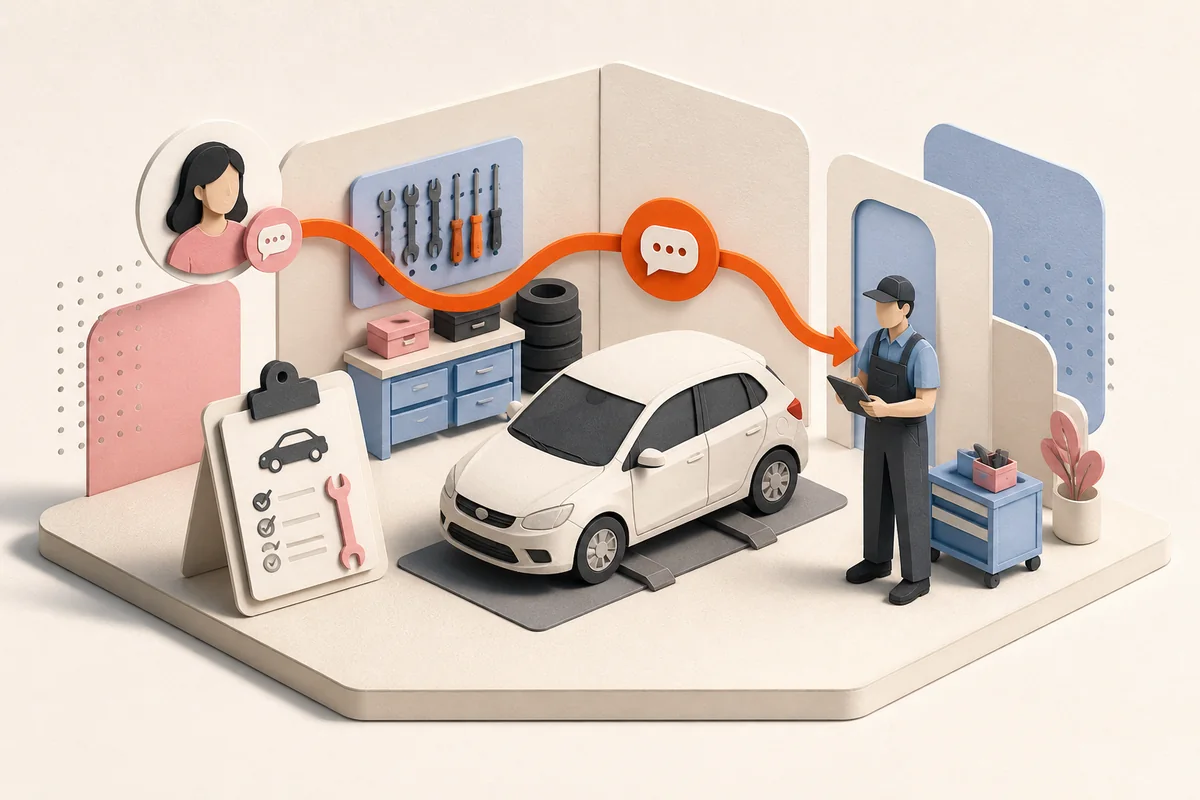
Automotive customers move between research and service in the same social feed. Someone asks about a model beneath a YouTube walkaround, sends an Instagram DM about a test drive, checks workshop hours in WhatsApp, or posts a complaint on Facebook after a repair.
Luni Chat can help dealerships, dealer groups, service centers, rental businesses, and mobility brands answer approved questions consistently. Vehicle availability, finance, safety, diagnosis, bookings, and customer records remain live or regulated workflows that need appropriate systems and people.
Support both sides of the automotive journey
Vehicle discovery
Luni can explain published model features, dimensions, powertrain options, warranty summaries, showroom locations, and the test-drive process. A model specification should be scoped to market, year, trim, and configuration; otherwise the assistant should ask for clarification.
Inventory and price change frequently. Without a current source, Luni should link to the live inventory page or transfer the inquiry rather than claim that a particular vehicle is available.
Sales follow-up
The assistant can collect preferred model, new or used preference, timing, location, trade-in interest, and test-drive availability. It should not promise a valuation, discount, delivery date, credit outcome, or monthly payment.
Ownership and service
Published maintenance intervals, workshop hours, service categories, roadside contact routes, recall-lookup links, and booking instructions can reduce repetitive calls. Warning lights, unusual vehicle behavior, collision damage, safety, and individual repair diagnosis need a qualified service adviser.
Complaints and retention
Warranty-process questions, feedback, and general aftercare can receive an initial answer. Disputed repairs, safety complaints, finance issues, personal records, and service recovery should transfer with priority.
Build knowledge by market, vehicle, and location
Organize sources around precise identifiers:
- brand, model, model year, trim, market, and configuration;
- approved feature and warranty language;
- dealership or workshop location, hours, and services;
- current campaign terms with start and end dates;
- test-drive, trade-in, reservation, and handover process;
- maintenance and roadside resources;
- service booking, cancellation, and loan-vehicle policies;
- safety, finance, privacy, and complaint escalation.
Archive launch information when specifications or offers change. Old social content should route customers to current product pages instead of preserving expired terms in the reply.
Protect the high-consequence boundaries
Luni should not tell a customer that a vehicle is safe to drive based on a DM description. It can share the manufacturer or business’s approved guidance and route the customer to roadside or service support. It should also avoid personalized finance advice, credit predictions, insurance interpretation, or exact trade-in valuations.
Account-specific service history, finance status, and vehicle ownership information require identity checks in the company’s authorized workflow.
Convert campaign engagement into clean leads
Every model launch creates the same fragments across channels. Use one intake pattern:
- model or stock reference;
- customer’s question;
- preferred dealership;
- new, used, service, or fleet intent;
- timing and contact preference;
- test-drive or callback request;
- source post or campaign.
Move phone numbers, registration numbers, finance details, and documents out of public comments. If an inquiry becomes a negotiation, valuation, or booking, hand it to the responsible person with context.
Use video comments as durable support
YouTube and TikTok walkarounds keep generating questions after campaigns end. Luni can answer durable feature questions and point to the current configuration page. Instagram and Facebook are useful for launch and local-dealer conversations. WhatsApp and Messenger can support follow-up when the customer prefers messaging.
The answer should name market or model year when it matters. An accurate specification from another region is still the wrong answer.
Test automotive edge cases
Test:
- a sold vehicle still visible in an old post;
- two trims with similar names;
- a feature available only in another market;
- an expired finance promotion;
- a test-drive request that has not been confirmed;
- a warning light with possible safety implications;
- a recall question without a vehicle identifier;
- a repair dispute in public comments;
- a customer pasting a registration or finance detail publicly;
- a request for an exact trade-in value from one photo.
Run the same test set for every dealership and workshop. Group-level knowledge must not override local operating facts.
Coordinate a model launch across sales and service
Before a launch, create one approved model summary for the exact market and year. Record which specifications vary by trim, which features are optional, which prices are guidance only, and which dates remain unconfirmed. Connect every social asset to the same model reference, including teaser posts and video descriptions.
Sales owns lead routing and commercial follow-up; product specialists own specifications; service owns maintenance and safety language; compliance or finance partners own promotion wording. Luni should never bridge a missing approval by combining fragments from those teams.
During launch week, review questions by model, trim, and location. If prospects repeatedly ask whether a feature is standard, improve the product table. If they ask for stock, make the live inventory route more visible. If old videos attract questions about the previous model year, ensure the answer labels that context before linking to the current vehicle.
After a person accepts a lead, Luni should stop replying in parallel. Record whether the customer received a confirmed test drive, a useful callback, or no follow-up. That downstream result distinguishes genuine sales support from an inbox full of captured names.
Run a short post-launch review with dealership staff, not only the central campaign team. Local teams can identify where published product language did not match the questions, stock reality, or handoff capacity customers actually encountered.
Measure sales and service separately
For sales, track correct model answers, qualified handoffs, test-drive requests, confirmed appointments, and lead-source completeness. For service, track correct workshop routing, booking-page engagement, urgent handoff time, repeat questions, and knowledge gaps.
Guardrails include invented inventory, wrong-market specifications, expired promotion replies, unsafe driving advice, unconfirmed bookings, and exposure of customer information. Do not call a test-drive request a sale or an automated maintenance answer a resolved repair.
How Luni Chat helps automotive teams
Luni Chat helps automotive businesses answer from approved vehicle, location, and service knowledge across WhatsApp, Instagram, Messenger, Facebook, YouTube, and TikTok. It keeps product messaging consistent, captures social demand in one inbox, and transfers live decisions to sales or service teams with the conversation attached.
Create a free Luni Chat account and pilot one model family plus one workshop location. Test current specifications, an unavailable unit, a service question, and a safety escalation before connecting the rest of the group.