Industry
AI Customer Support for Home-Service and Field-Service Businesses
Capture useful job context while crews are working, without turning message triage into unsafe diagnosis, firm pricing, or unconfirmed scheduling.
By Luni Chat9 min read
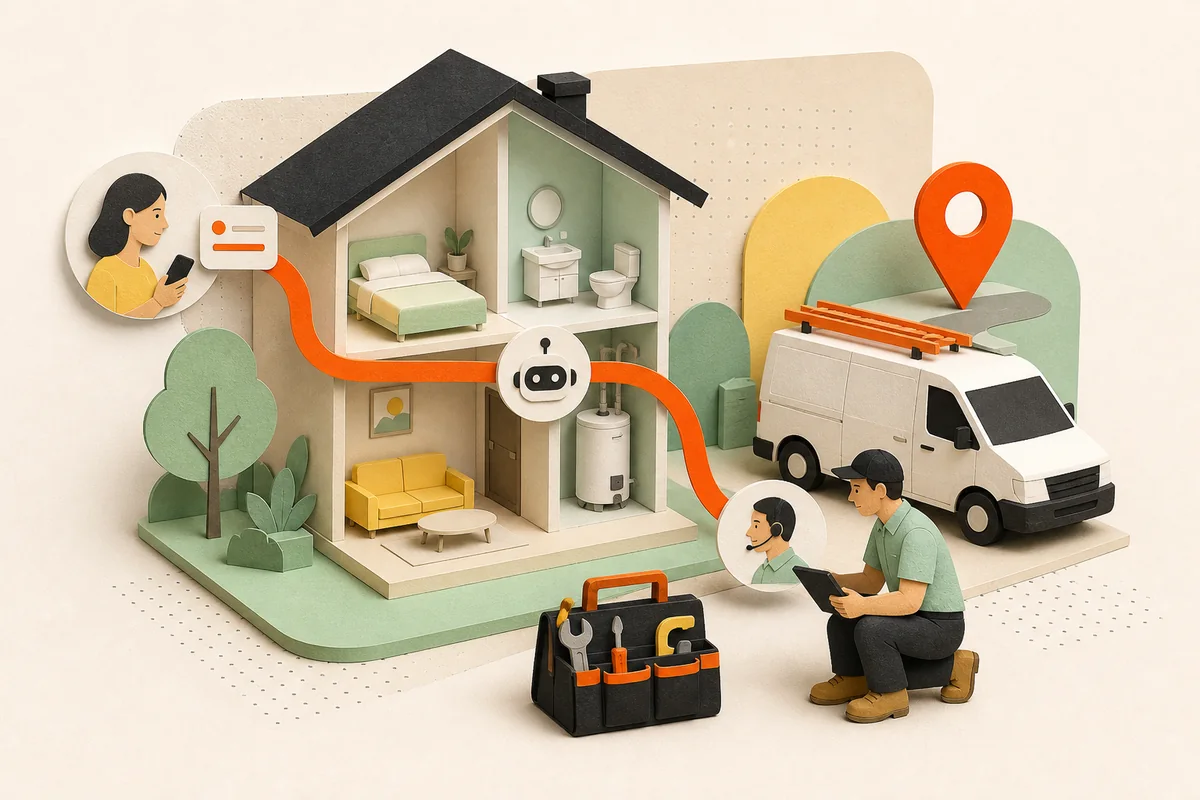
Home-service businesses win and lose work in the gap between a customer’s message and the team’s reply. A homeowner sends a WhatsApp photo of a leaking pipe, asks about service areas in Facebook comments, replies to a cleaning video on Instagram, or requests an air-conditioning quote after hours.
Luni Chat can help plumbing, electrical, HVAC, cleaning, landscaping, pest-control, repair, and other field-service teams answer routine questions and collect a useful job request. It must not diagnose hazards, promise a price, or confirm a technician visit without the people and systems that control the work.
Sort inquiries by urgency and job stage
Service fit
Luni can explain published service categories, coverage areas, business hours, property types, minimum charges, warranties, and the company’s booking process. It can ask what service is needed, the general location, desired timing, and whether the customer is an owner, tenant, or property representative when that changes the process.
Quote request
Collecting a description, photos through the company’s approved route, property type, access constraints, and contact permission can make the follow-up more useful. Unless the business has a verified pricing rule for the exact service, Luni should call it an estimate request—not provide a binding quote.
Scheduling and arrival
Published arrival windows, preparation steps, rescheduling policy, and technician-identification process are useful knowledge. Live technician availability, dispatch, and appointment confirmation require the operating team or scheduling system.
After-service support
Luni can explain warranty-claim and invoice-question routes. Active damage, repeated failure, payment disputes, and safety concerns should reach a person quickly.
Create knowledge around actual field operations
Useful source material includes:
- services, exclusions, property types, and licensed-work boundaries;
- postal codes, towns, travel fees, and after-hours coverage;
- hours, seasonal availability, and holiday exceptions;
- what customers should prepare before a visit;
- published diagnostic, call-out, cancellation, and warranty policies;
- how estimates become approved work;
- emergency and safety language approved by the business;
- dispatch, complaint, and manager escalation routes.
Keep every trade or service distinct. Advice that is safe for routine cleaning may be inappropriate for electrical, gas, structural, chemical, or pest situations.
Use a safety-first intake
Configure an immediate stop-and-escalate path when a message mentions fire, sparks, gas smell, flooding near electricity, structural movement, poisoning, entrapment, or another imminent hazard. The assistant should use only the company’s approved safety language and direct the person to local emergency services when the business has defined that instruction.
Do not generate do-it-yourself repair steps for high-risk situations. Even a plausible instruction can increase damage or injury when the system cannot inspect the property.
Turn a social message into a dispatch-ready lead
A useful intake can capture:
- service category and the customer’s own description;
- town or postal-code area rather than a full address in public;
- property type and access constraints;
- urgency and whether damage is active;
- desired timing;
- approved contact details and consent;
- any reference for existing work;
- the post, advertisement, or channel that generated the inquiry.
Move personal contact, full address, invoice, and property-access information to a private, approved process. Luni Chat’s handoff gives the office the conversation history without leaving a technician to interpret a bare “new lead” notification.
Handle every channel deliberately
Public comments are good for service-area and general availability questions, but addresses and damage details should move private. WhatsApp and Messenger can support structured follow-up when the business has clear hours and an emergency alternative. Instagram, Facebook, TikTok, and YouTube content may continue attracting questions months later, so replies should point to current services and coverage.
For multi-location businesses, scope each answer by branch. A national account should not promise that a service, price, or after-hours team exists in every territory.
Test field-service edge cases
Before launch, test:
- a postal code just outside the service area;
- a vague “how much?” request;
- a renter without owner approval;
- an old ad for a discontinued service;
- a request that crosses two trades;
- active water near electricity;
- a same-day appointment request when schedules are unknown;
- a warranty claim with missing job details;
- a public complaint naming a technician;
- a customer sharing a full address publicly.
Review whether each case was safely answered, routed, or refused. Fast lead capture is not a win if the office must re-collect every field.
Divide ownership between the office and field team
The office should own service definitions, coverage, scheduling language, price boundaries, lead routing, and customer follow-up. Qualified field leaders should own safety wording, preparation instructions, technical exclusions, and the conditions that require an on-site assessment. Marketing can own campaign context, but it should not publish an offer that operations has not added to current knowledge.
Create a short daily review during peak seasons. Confirm service-area changes, next available response expectations, paused services, weather disruption, and the priority contact. Temporary notes need an expiry time and a named person responsible for removing them.
When a technician discovers that customers routinely lack a preparation step—such as access to a utility area—the team should update the canonical appointment guidance. When the office receives incomplete handoffs, update the intake fields instead of asking Luni to write a longer summary. This shared loop makes automation part of field operations rather than a separate marketing tool.
For franchise or branch models, keep local facts isolated. The national brand can define voice and safety standards, but each branch must control service radius, hours, available trades, and escalation contacts.
Measure lead quality and customer safety
Track in-area qualified inquiries, complete handoffs, time to office acceptance, confirmed appointments, repeat contact, and knowledge gaps by service. Pair them with unconfirmed appointments presented as booked, unsupported prices, unsafe advice, missed hazard language, wrong service-area answers, and public exposure of personal information.
Separate inquiry, qualified job, estimate visit, confirmed work, and completed job. This makes it possible to see whether Luni improves the pipeline rather than simply increasing message volume.
How Luni Chat helps home-service teams
Luni Chat helps field-service businesses respond across WhatsApp, Instagram, Messenger, Facebook, YouTube, and TikTok using their own service and policy knowledge. It answers routine questions while crews are working, collects useful job context, brings conversations into one inbox, and alerts people when safety or operational judgment is required.
Start free with one service area, three common job types, and the business’s real emergency rules. The best pilot outcome is a customer who knows the next step and an office team that receives enough context to act.